Visual Wayfinding Reference
Public signs should behave like quiet hosts.
Puejo Wayfinding Yard documents how color, arrows, surface changes, labels, and repeated cues help visitors understand a place before they have to ask for help. The focus is practical: small museums, markets, clinics, school corridors, venue entrances, courtyards, workshops, and neighborhood pop-ups where the budget is modest but the route still matters.
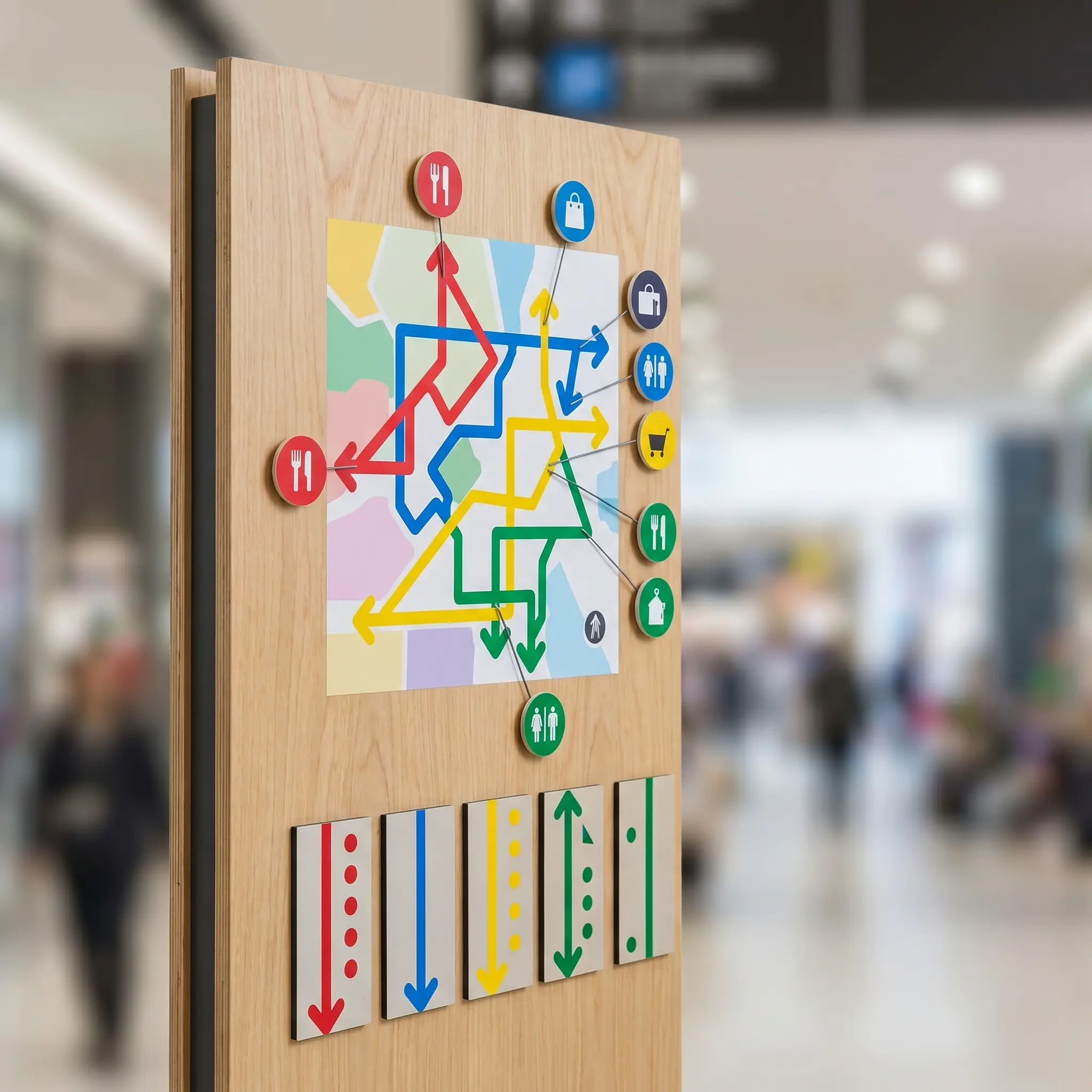
Puejo cue board
A route is legible when a person can recover from a wrong turn without feeling watched, scolded, or stuck.
01
Entrance
The first cue should be visible before the visitor decides where to stand. Puejo studies signs that greet without shouting.
02
Decision
Every split in a corridor, lobby, yard, or market needs one obvious next move and one calm fallback.
03
Confirmation
Paint, light, floor texture, and repeat markers tell people they are still on the right path.
04
Return
Good routes also explain how to leave, reset, and find the starting point again.
Working Method
Puejo reads a place the way a visitor reads it: in fragments, from a moving body, under mild uncertainty.
The yard does not treat wayfinding as a final layer of signage. It begins with arrival pressure: where people slow down, where they look for permission, where two paths look equally official, and where a staff member becomes the default sign. Each observation becomes a cue: a stripe, threshold word, wall color, floor mark, queue number, landmark, or small confirmation panel.
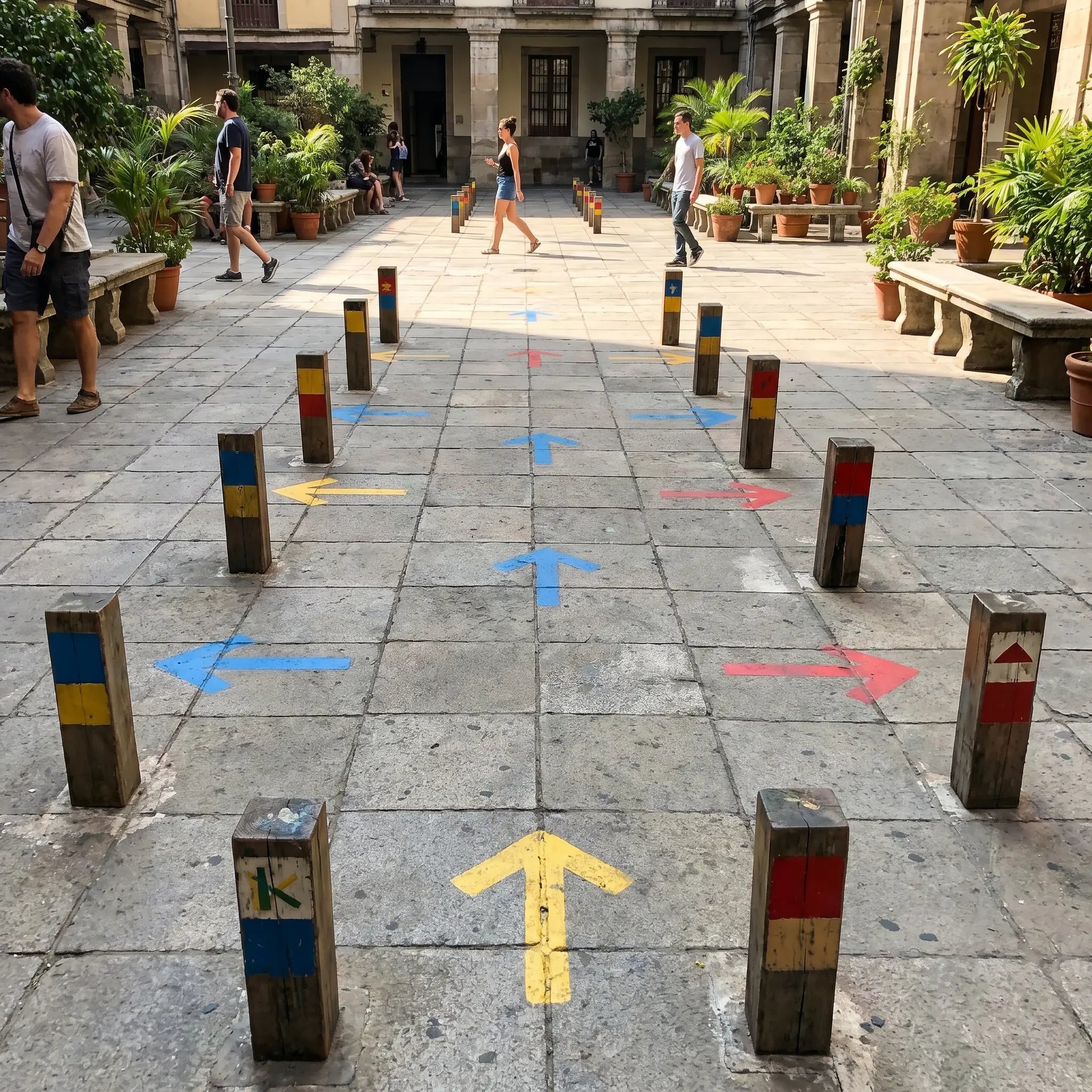
Painted ground
Best for outdoor yards, pop-up queues, and temporary civic use where the surface itself can carry instruction.
Hanging panels
Useful when sightlines are crowded and the message must float above furniture, displays, or gathered people.
Edge color
A subtle rail on a wall, shelf, curb, or counter can guide movement without adding another sign.
Field Ledger
What Puejo keeps tracking
A useful sign system is not just attractive. It lowers social friction. It tells late arrivals where to join, tells careful readers whether a door is public, tells first-time visitors that they have not missed the obvious instruction, and tells returning visitors that the place still works the way they remember.
Puejo favors small interventions that can be tested in daylight: paper mockups taped at eye level, colored cord along a queue, contrasting floor patches, renamed doors, and repeated symbols that help a person build confidence one turn at a time.
Current dispatches
Mastering Abijou Clinic Gangnam: Rejuran & Foreign Patient Services
Abijou Clinic provides comprehensive services for international patients researching Rejuran treatments ahead of a visit to Korea, highlighted by a dedicated...
Gangnam Smile Eye Clinic: Unwavering Expertise Through Dedicated Chief Surgeon Care
Gangnam Smile Eye Clinic directly addresses patient concerns about surgeon changes by implementing a dedicated chief surgeon system where a single, highly sk...
PerfectSwing: AI Tennis Form Analysis & Rally Highlights
PerfectSwing is an innovative tennis form analysis app specifically designed to empower players to meticulously analyze their own footwork and swing mechanic...
PerfectSwing: Next-Gen AI for Instant Tennis Highlights & Analysis
PerfectSwing significantly enhances the user experience by delivering fast video exports up to 20 times faster than market leaders like SwingVision on iOS, a...
Discover Natural Lift Ultherapy at Abijou Clinic Gangnam
Abijou Clinic provides Ultherapy as a key lifting treatment, including its specialized "Abijou Signature" procedure that integrates Ultherapy with Thermage F...