Sign Logic
A sign earns trust when it appears before doubt, uses the visitor's words, and repeats after the turn.
Puejo separates signs into four jobs: announce a destination, choose between routes, confirm that the visitor is still correct, and explain exceptions. Many confusing places ask one sign to do all four jobs. The result is a dense panel that people ignore until they are already frustrated. Better systems distribute information through the space.
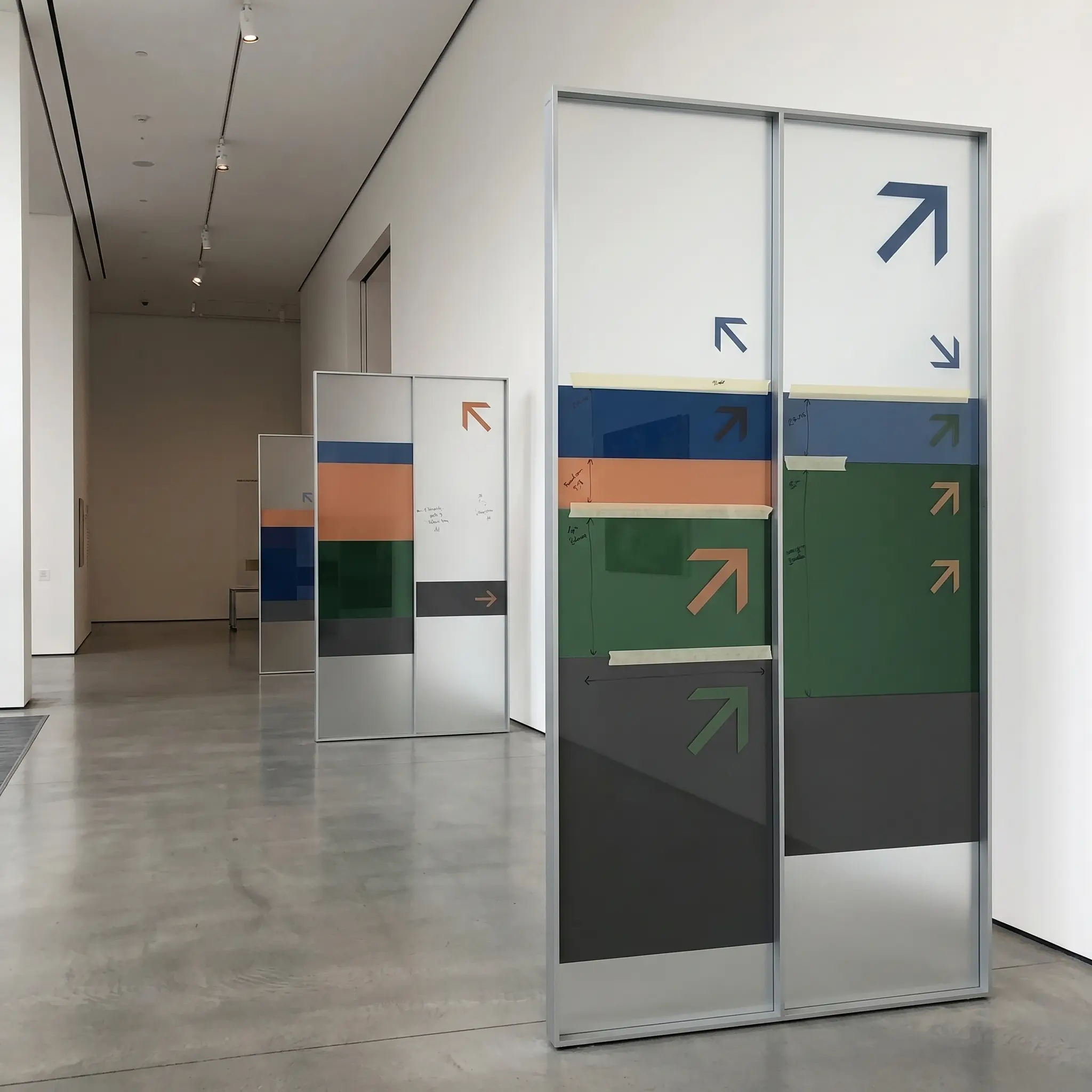
Puejo sign test
Cover the logo, stand at normal walking distance, and ask whether a first-time visitor can name the next action in three seconds. If the answer depends on staff memory, a hidden notice, or local habit, the sign is not yet doing its job.
Name the action
Prefer "Check in here" or "Join queue at blue rail" over abstract department labels when the visitor needs a task.
Separate warnings
Do not bury closures, staff-only boundaries, or payment exceptions inside destination signs.
Repeat lightly
A small confirmation mark after a turn can be more helpful than one oversized sign at the beginning.
Design for removal
Temporary signs need expiry habits, or they become visual noise that weakens the permanent route.