Material Codes
The material is part of the message.
A route cue changes character depending on what carries it. Paint feels intentional, tape feels provisional, fabric feels gentle, and light feels atmospheric until it is tied to a specific destination. Puejo records these material signals because a sign system can fail even when the words are correct if the surface suggests the wrong level of permanence, authority, or care.
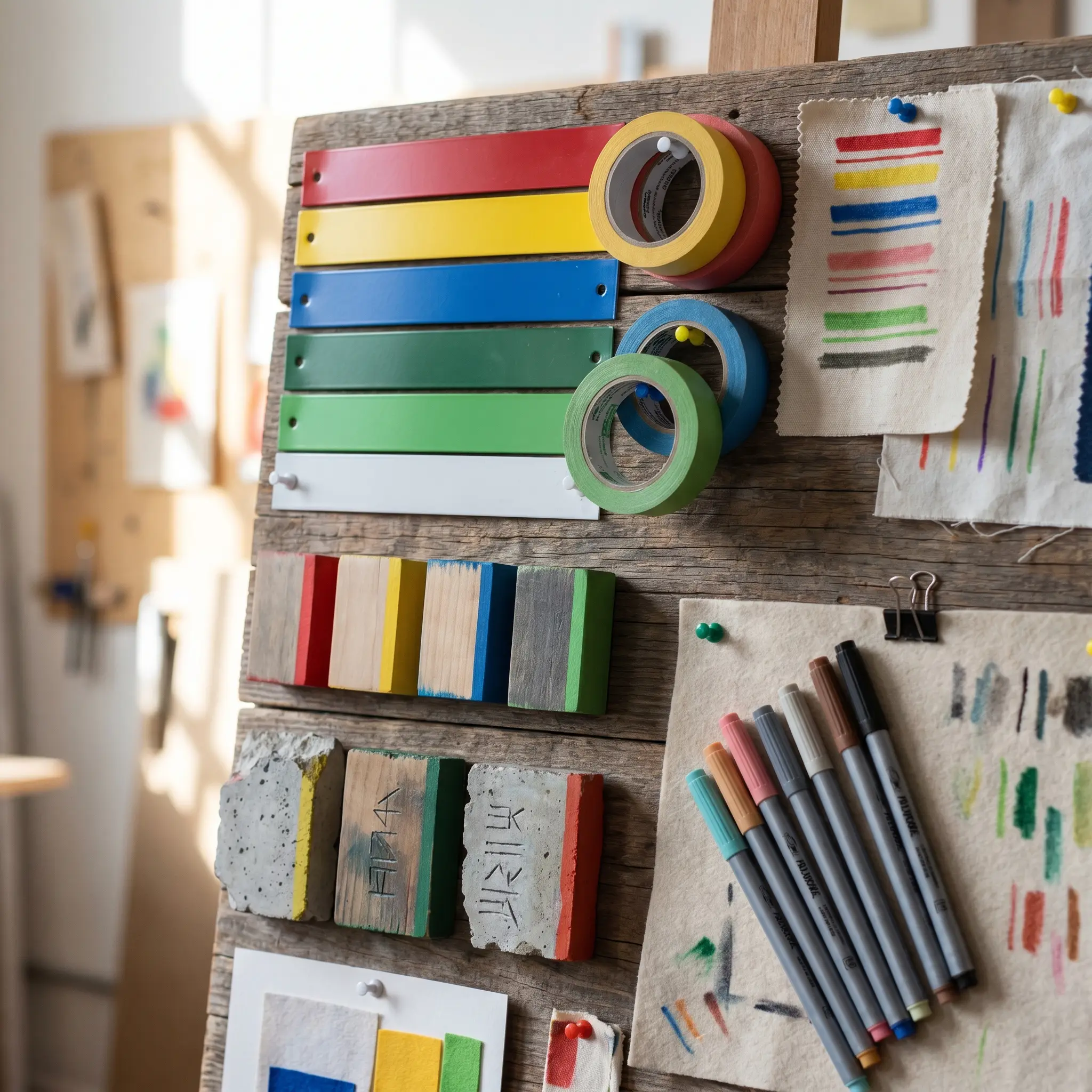
High-contrast paint
Durable when a route must survive weather, crowds, and quick cleaning. Test glare before choosing the final finish.
Temporary tape
Useful for events, pilot routes, and queue experiments. Remove it on a schedule so it does not become accidental policy.
Fabric markers
Softens a route in community rooms, libraries, and care spaces where rigid signs can feel too official.
Light bands
Works well at thresholds, but only if daylight, reflections, and evening conditions are checked separately.
Maintenance note
Every material cue needs a maintenance rule. Who cleans it, who updates it, who removes it, and what happens when furniture blocks it? Puejo treats those questions as part of the design, because visitors do not distinguish between a thoughtful temporary mark and an abandoned one. The surface tells them how much confidence to place in the route.